STABILITY,
GOVERNANCE
AND
SUSTAINABLE
GROWTH
Improving
Sustainability
Governance
Promoting
Socio-economic
Stability
Carbon Neutrality and
Impact Management
PRIORITY
AREAS
STRATEGIC
PILLAR
SDGs
IMPACTED
MATERIAL
TOPICS
M2
M4
CONTEXT FOR 2023
LKR 5.0
billion
Invested in
Green Financing
LKR 1.1
billion
Disbursed after ESMS
compliance
52
Branches with
Solar Power
•
Communities faced the dual impacts of hyperinflation and a volatile
economy, thereby contributing towards the instability of businesses
and livelihoods.
•
The growing dangers and threats associated with climate change
have intensified the need to account for social and environmental
aspects in financial decision-making, particularly with respect to
lending and investing.
LKR 129.7 million
Community Investments
Four
new 'BoC Gammana'
A BEACON OF TRUST IN EVERYTHING WE DO
At Bank of Ceylon, we
remain mindful of our
impact across people and
planet. Therefore, our
operations are based on
ensuring that we positively
impact society, while
mitigating our impact
on the environment. We
believe that in doing
so, we can serve as a
trusted entity that drives
sustainable growth,
while supporting the
economy and guiding its
stakeholders into a better
future for all.

A BEACON OF TRUST IN EVERYTHING WE DO
PRIORITY AREA 01:
IMPROVING SUSTAINABILITY
GOVERNANCE
BoC is driven by a core ambition to drive
ESG principles across the organisation,
and become the market leader in
sustainable banking. The entity strives to
achieve an impact that extends beyond
mere profitability. Therefore, strong
governance and control systems are
in place to reinforce this commitment,
maintain accountability for the Bank’s
actions and ensure a tangible, long-term
positive transformation across its sphere
of impact.
The Bank has further taken tangible
steps to formulate a sustainability
roadmap framework with the support of
external consultants, thereby ensuring
the strengthening of its governance
frameworks and policies to match the
international standards.
Responsible Partnerships and
ESG Risk Management
In the course of the year, the Bank
screened 1,223 loan facilities under the
Consumer and Development Banking
Division for Environmental & Social (E&S)
criteria.
Loans totaling LKR 1.1 billion were
disbursed during the year following
assessments for ESMS compliance.
BoC's well-established ESMS policy
adheres to ADB, AIIB, and CBSL
guidelines, which stipulate that credit
lines and loans with ratings of A, B, or C
are subject to an E&S screening process.
During the year, the Bank maintained its
pledge, not to support or fund initiatives
that jeopardise biodiversity. Furthermore,
the projects that apply for funding must
first receive an Environmental Protection
Licence (EPL) and prior clearance from
the relevant authorities, in accordance
with guidelines issued by the Central
Environmental Authority (CEA) and
specified in the National Environmental
Act.
Number of officers trained for E&S Screening
1,126
Number of loans screened for ESMS compliance
during the year
1,223
Value of facilities disbursed after confirming to ESMS
compliance during the year (LKR billion)
1,145
Number of loans rejected during the year due to
non-compliance with ESMS regulations
29
Additionally, when choosing suppliers,
social and environmental factors are
taken into account. For instance,
the Bank assesses adherence to ISO
standards with respect to machinery
procurement, conformance with
labour laws during the procurement of
services, and compliance with prevailing
environmental standards, including
those concerning noise levels, carbon
emissions, etc.
Capacity Building on
Sustainability
Under the direction of the specialised
ESMS Unit within the BoC's Independent
Integrated Risk Management Division
(IIRMD), and in accordance with the
Bank's ESMS policy, BoC continues to
fund its cadre's capacity development.
In 2023, the Bank conducted several
initiatives aimed at educating and
increasing staff awareness. The Bank
relied on both internal and external
resources, as well as subject experts, to
train and develop employees' awareness
and capacity, while investing in obtaining
professional qualifications pertaining to
sustainability and digital transformation.
The Bank's sustainability-related capacity
building initiatives are conducted across
the organisation, spanning the highest
levels of Corporate Management to the
Bank's credit officers and relationship
officers.
Accountability and Disclosures
This is the Bank's 11th Integrated Annual
Report, which incorporates external
assurance of ESG/Sustainability data and
adheres to global reporting frameworks
and best practices.
For more information on the Bank’s
inclusion of ESG factors into the Company's
disclosures, please refer ‘About this Report’
on page 104.
PRIORITY AREA 02:
PROMOTING SOCIO-ECONOMIC
STABILITY
This Annual Report highlights the Bank's
contribution towards national growth
and stability in the face of exceptional
obstacles. During the year, the Bank’s
tireless efforts fueled economic recovery,
maintained macroeconomic stability,
permitted the continuation of necessary
goods and services, and stabilised the
financial system in addition to providing
prime banking services.
Supporting Macro-economic
Stability
The Bank has consistently backed
the Government's monetary policy
execution, which aims to improve the
nation's economic environment. Being
the industry leader in remittances,
the Bank prioritised and enabled vital
foreign currency inflows into the nation.
The Bank invests in the Government
securities market and pays taxes and
dividends to the Government, which
helps fund its operations.
In 2023, the Bank further prioritised
business continuity by ensuring its
branches remained accessible and
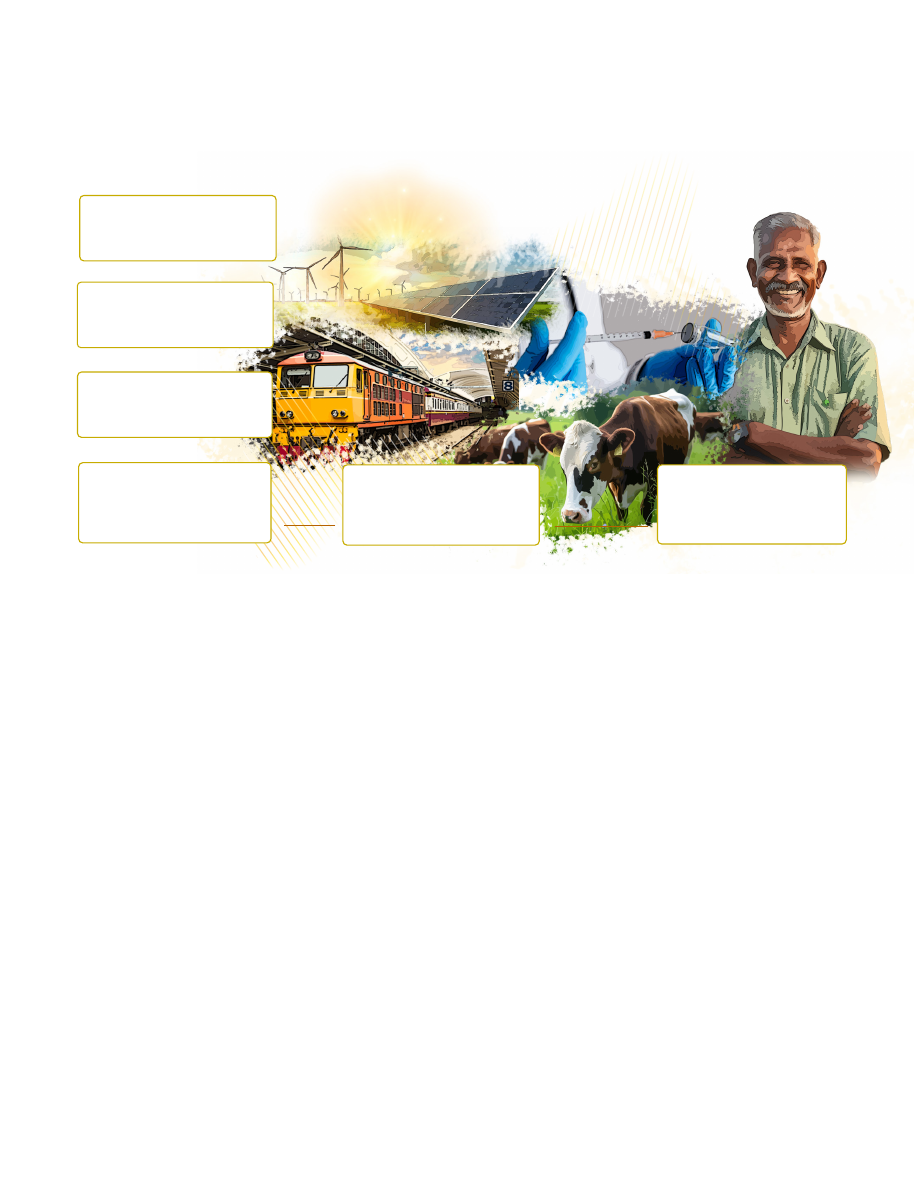
USD 4.8 billion
Inward remittances facilitated
LKR 25.9 billion
Contributed to Government
revenue as taxes and dividends
USD 3.0 billion
Financing provided for
energy sector
USD 130.3 million
Pharmaceutical imports
facilitated
LKR 27.6 billion
Disbursed to agriculture, food
processing and dairy under
development lending
174
Businesses supported
under the Bank’s business
revival schemes
functional even in the face of significant
constraints and disruptions within
the operating environment. Access
to financial services was maintained
throughout the island with the Bank's
extensive branch network, digital
platforms, grassroots agent network, and
mobile banking capabilities.
The Bank was involved in enabling the
import of necessities including medical
equipment, pharmaceuticals, LPG, and
petroleum despite the nation's depleted
foreign exchange reserves.
The organisation further leveraged
on a range of initiatives to fuel the
nation's economic recovery, particularly
by continuing to assist customers
affected by the crisis and promote the
sustainability of their businesses by
offering concessions, rearranging and
rescheduling facilities, and allocating
funds to the significantly impacted
industries to aid in their recovery and
resilience.
Infrastructure Development
BoC serves as a crucial source of funding
for both public and private sector
infrastructure development, including
ground-breaking initiatives that raise
living standards and stimulate the
Sri Lanka economy. The Bank possessed
an exposure of LKR 974.6 billion to
infrastructure and construction projects
as at the end of the year.
Community Development and
Capacity Building
The Bank implemented year-round
initiatives in 2023 to enhance financial
literacy and increase the knowledge
on the Bank's concessionary products
and offerings among the staff and the
customers.
The Bank’s flagship initiative, 'BoC
Gammana' continued to make strides
during the year. The programme
coordinates with various organisations
and services to improve the health and
welfare of the targeted communities,
while providing holistic support for the
community's environmental, social, and
developmental requirements. These
communities further received training
from the Bank on financial literacy, and
saving practices.
In addition, the Bank continued to be
receptive to the demands of key societal
groups, allocating over LKR 68.3 million
to promote cultural and religious events,
professional and entrepreneurial growth,
and enhance the spheres of sports,
education, healthcare, and science
and technology. BoC staff members
distinguished themselves as role models
throughout the year by volunteering
and planning community development
initiatives in response to emergencies or
urgent needs in their neighbourhoods.
The Bank also formalised a way to
calculate staff volunteer hours and
encourage them to engage in volunteer
work.
Development Lending
The Bank makes a significant
contribution towards society through
development loans, which upholds the
entirety of supply chains, promotes
entrepreneurship, generates and
maintains jobs and aids in the industrial
and rural growth of the nation.
A BEACON OF TRUST IN EVERYTHING WE DO
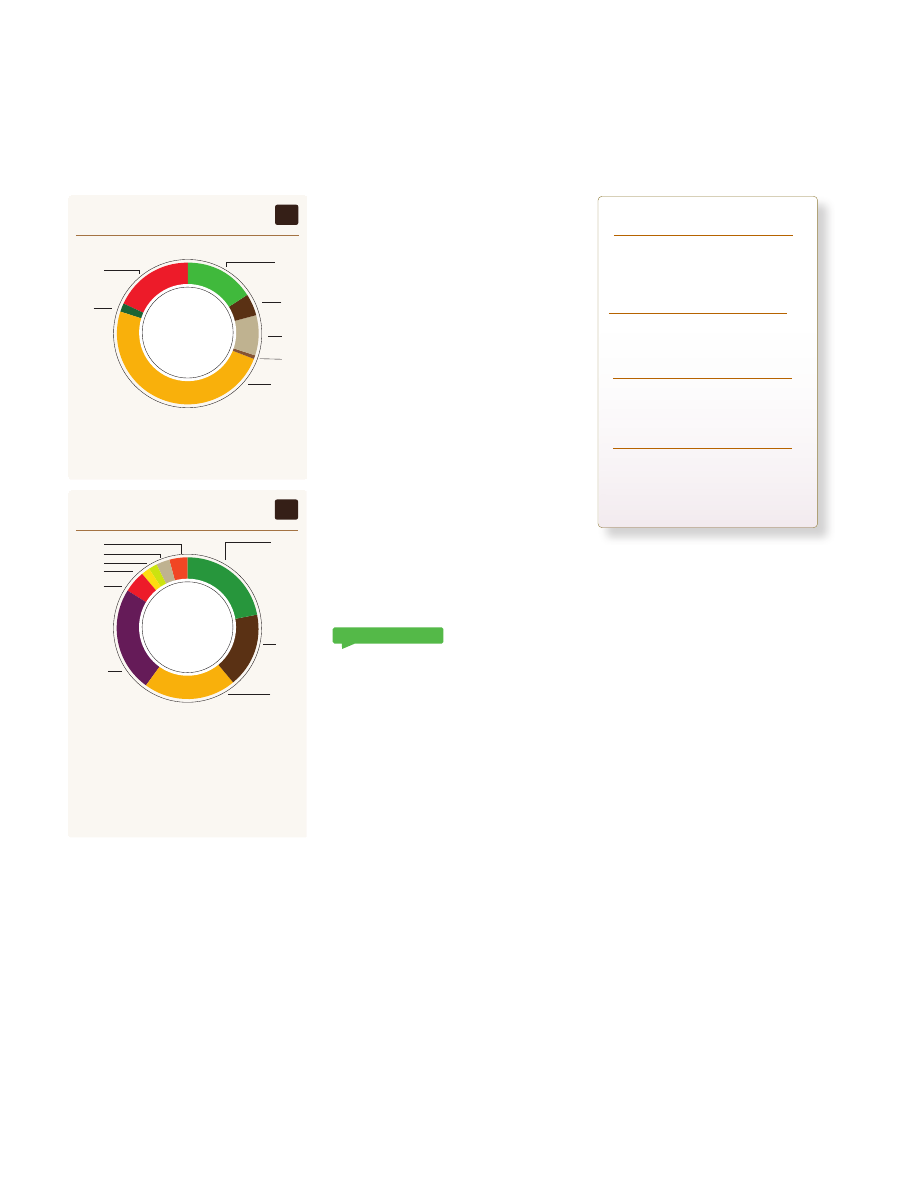
DEVELOPMENT LENDING
PORTFOLIO
%
5%
1%
49%
18%
2%
16%
9%
Agriculture
Dairy
Travel and tourism
Food processing
Textile industry
Other
Green businesses
Microfinance
MITHURU GROUPS
%
21%
3%
2%
2%
5%
24%
4%
22%
Central Province
Eastern Province
North Central Province
Northern Province
North Western Province
Sabaragamuwa Province
Southern Province
Uva Province
Western Province
17%
BoC offers financial services to vulnerable
groups and industries that have
historically been underserved but are
crucial to the continuity of Sri Lanka's
economy. The Bank places a strong
emphasis on social and financial inclusion
as well as equitable development.
Additionally, the Bank acts as a
Participatory Financial Institute (PFI) for a
number of concessionary credit lines that
support vulnerable communities around
the island, offer assistance to sectors hit
by the crisis, and encourage the use of
green technologies and enterprises.
The Bank encourages and finances
MSMEs, cottage businesses and
entrepreneurial endeavours through
unique lending products and its popular
microfinance programme, "BoC Mithuru".
Additionally, the Bank concentrates
its efforts on enhancing the financing
options available to female entrepreneurs
and women-led businesses, thereby
empowering thousands of women
throughout the island to create and
expand sources of income and livelihoods
that will sustain them, their families and
their communities.
Supporting Suppliers
The Bank continued to maintain partnerships with its suppliers, disbursing a total of
LKR 8.6 billion to local suppliers (95% of total supplier payments) during the year.
PRIORITY AREA 03:
CARBON NEUTRALITY AND IMPACT MANAGEMENT
In line with the Government’s focus on mitigating climate change, the Bank is at present
taking conscious steps towards becoming a carbon-neutral entity, and minimising
its carbon footprint on a year-on-year basis. The Bank’s efforts in this regard, span
sustainable financing, green financing, environmental conservation and minimising its
footprint. The Bank reduced 28% of carbon footprint in 2023 on YoY basis while GHG
emission intensity was also reduced from 3.3 to 2.3.
Minimising the Bank’s Footprint
In light of its broad geographic reach and large customer base, BoC undertakes
deliberate and coordinated steps to lessen its operational impact on the environment.
BoC strives to accomplish this by encouraging sustainable practices throughout the
Bank's value chain and integrating eco-friendly practices across all aspects of its
operations.
In an attempt to integrate eco-friendly practices into its strategy and operations, the
Bank cultivates a sustainability culture across every component of its business units and
activities.
LKR 11.0 billion
New microfinancing
32,115
Number of new microfinance
loans
LKR 3.3 billion
Microfinancing to women-led
businesses
13,252
Number of new microfinance
loans to women-led businesses
Microfinancing 2023
The organisation has established
policies and guidelines stipulating that
any new construction projects the Bank
undertakes must adhere to the Green
Building Council's (GBC) Green Building
standards. For consecutive years, the
Bank is recognised with the "Green
Business leadership award" from GBC
for the commitment in Green Building
compliance and commitment in going
green.
At present, the Bank has commenced
the procurement process for solarising
30 branches, and reviews in progress
to convert branches into environment
friendly buildings.
The Bank employs engineers certified by
the GBC, while staff members certified
by the National Cleaner Production
Centre (NCPC) are employed within the
Sustainability Unit. By investing in the
development of green technology and
energy efficiency capabilities, the Bank
designated key personnel for external
training and capacity building in 2023.
The GBC held the Annual Green
Building Awards 2023, at which the
Bank's accomplishments pertaining
to solarisation and green building
certification were honoured.
2023
2022
% change
Electricity generated from renewable
14%
13%
1
Emission intensity (per millions)
0.05
0.04
25
GRI 302-1/302-4/305-4/303-5
2023
2022
% change
Electricity (MWh)
22,730.0
25,301.4
(10)
Fuel (m3)
102.9
226.9
(55)
Solar energy (MWh)
3,245.3
3,219.3
1
GHG emissions (tCO2eqv)
19,708
27,332.7
(28)
The Bank further took steps to minimise its electricity consumption by replacing its
electrical appliances (lights, airconditioning, computers, etc.) with energy efficient
appliances, while carrying out awareness sessions for staff members on energy saving
and optimisation. New IT data warehouse is built to International Standards of energy
saving and optimisation.
Employee training and awareness-raising
initiatives are complemented by the
Bank's sustainability pledge and the
provision of specific financing plans for
solar installation to staff members. As
part of a novel approach to emphasise
sustainability and increase staff
involvement, the Bank launched home
gardening initiatives at the branch level
during 2022, which continued during the
year 2023 also. Resultantly, 332 branches
and 148 staff members actively cultivated
local produce on the Bank's properties
in 2023.
Energy Consumption
GRI 302-1/2/3
The Bank is dedicated to lowering
its dependency on fossil fuels while
boosting energy efficiency throughout its
branch network and activities. In 2023,
BoC's branch solarisation programme
continued, with 52 branches equipped
with photovaltic power and 21 branches
undergoing solarisation. The Bank is
working on a carbon management plan
and finalising the carbon neutrality
targets.
10
Awards for Green Buildings
01
Branches completed as per the
Green Building concept
06
Branches are being reviewed for
Green Building certification.
8%
of the branch network solarised
14%
of energy requirement of operations
fuelled by renewable sources
3,245.3 MWh
Renewable energy generated
LKR 146.6 million
Investment in Solar
10.0 Mw
Solar capacity funded
A BEACON OF TRUST IN EVERYTHING WE DO
Carbon reduction by our operational process
Paper recycle (52,418 kgs)
59.9 tCO
2
e
E-waste recycle
5.7 tCO
2
e
Solar energy
1,338.3 tCO
2
e
Emissions
GRI 305- 1/2/3/4
The ISO 14064:1 standard for
measuring and reporting greenhouse
gas emissions serves as the basis for
the Bank's assessment and disclosure
of greenhouse gas emissions. The
Bank completed a comprehensive
Carbon Management Plan in 2022
and implemented new approaches to
measuring, reducing, and managing
BoC's carbon footprint during the year
2023 also.
Material Consumption
GRI 306-1/3/4
The Bank continued increasing the use of
process automations, which boosted the
Bank's push towards paperless banking.
In conjunction with its strategic focus
on digitalisation and the growing trend
of customers using digital channels, the
BoC is well-positioned to maintain these
efforts in the years to come.
The Bank is dedicated towards
minimising its consumption across
the supply chain, by procuring
environmentally friendly gift items and
promotional materials. The Bank has
taken tangible efforts towards reducing
its plastic and polythene consumption.
It has also minimised the usage of pet
bottles in the corporate events and
meetings.
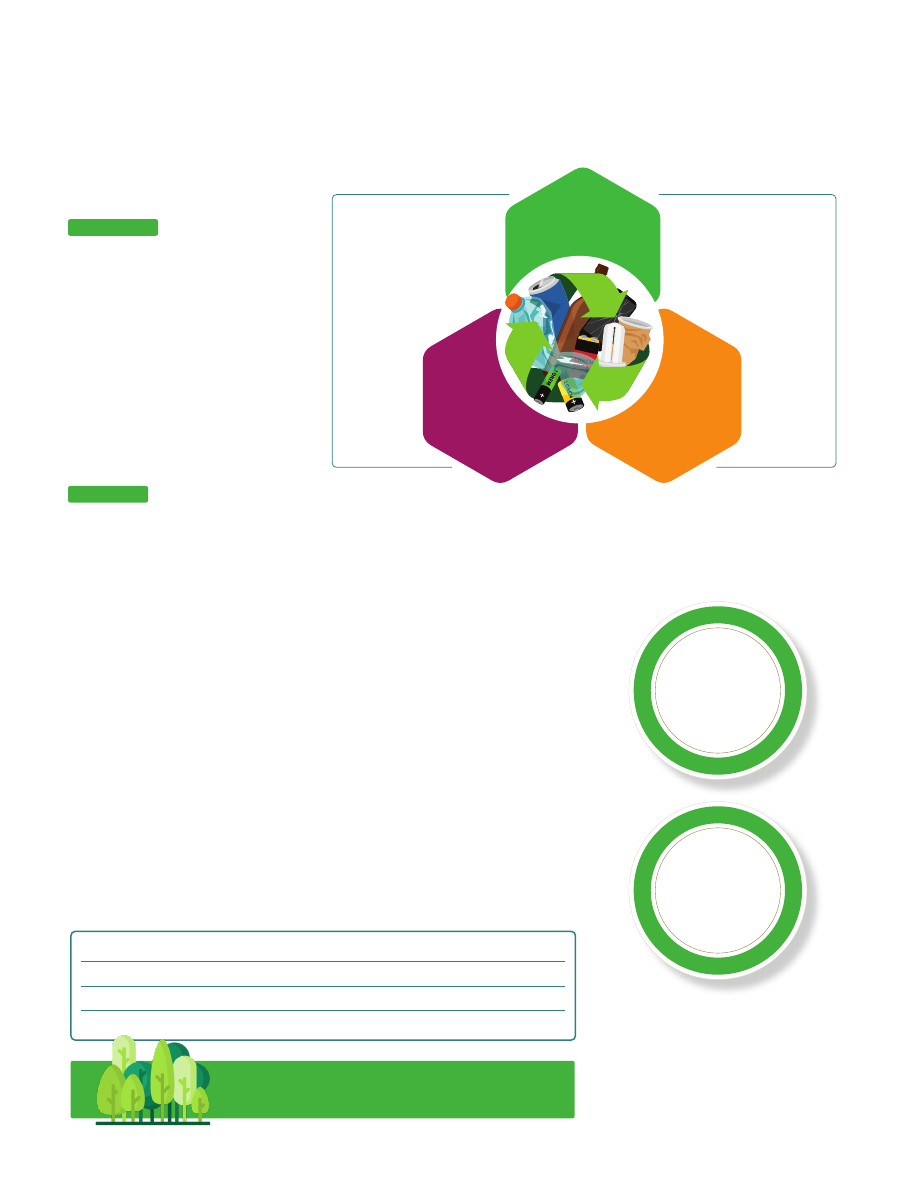
The Bank separates all waste as solid
waste or kitchen waste and food. The
following efforts are taken with respect
to solid waste management at the Bank:
Sustainable Financing
BoC strives to manage Environmental
and Social (E&S) risks, prioritises E&S
considerations in lending decisions,
and actively supports socially inclusive
and environmentally/climate-friendly
projects, products and services through
a variety of green financing credit lines
and support services, all in accordance
with the CBSL Roadmap for Sustainable
Finance.
Green Financing
Concessionary funding options represent
one of the innovative green finance
efforts that BoC spearheads. These
initiatives are designed to encourage
both domestic and commercial
customers to adopt clean technologies
and renewable energy. The Bank
continued to offer loans for biogas and
solar power plants, as well as loans
and leases for electric vehicle choices
that lessen reliance on fossil fuels, thus
contributing towards mitigating the
impacts of climate change by reducing
emissions.
LKR 478
million
disbursed for
sustainable
manufacturing
LKR 350
million
disbursed for waste
management
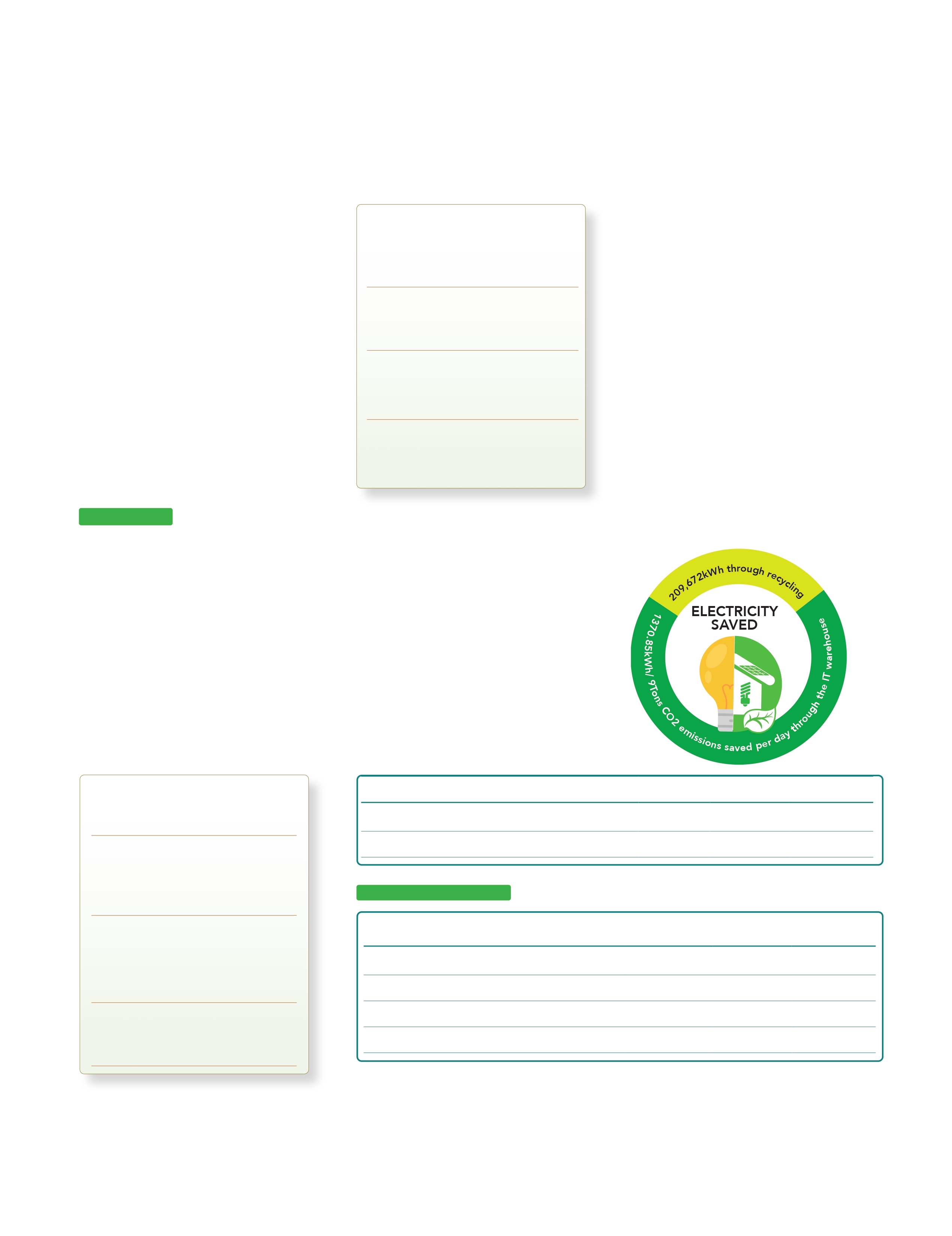
13
70
.8
5k
W
h/
9T
on
s C
O2
More than
1,000 Kg
food waste
being
processed
without
land filling
52,418Kg of
wastepaper bags
recycled to save 891
fully grown trees.
10,880Kg
e-waste
disposed
through
registered
recycling agents,
thereby avoiding
land filling
fully grown trees saved by paper
recycle in the year 2023
891

Value of outstanding loans to the solar energy sector (LKR billion)
1.6
Number of outstanding loans to the renewable energy sector
13,575
Value of new facilities granted for green finance in 2023 (LKR million)
530.9
Number of new facilities granted for green finance
175
Less Plastic Initiative
Fulfilling its commitment towards
advancing the sustainable development
agenda, BoC partnered with the Marine
Environment Protection Authority (MEPA)
and the Coastal Conservation Authority
of Sri Lanka in an effort to collect plastic
and polythene waste, from selected
locations across the island. Accordingly,
BoC sponsored the cleanup of 6 marine
sites around the country on World
Environment Day 2023. Collected waste
was sorted and sent for recycling with the
support of registered plastic recyclers,
resulting in a reduction of plastic waste
that ends up in landfills.
Life to our beaches
During the year, BoC joined hands
with Biodiversity Sri Lanka’s 'Life to Our
Beaches' programme, in collaboration
with MEPA. As one of the founding
members of the Biodiversity Sri Lanka,
BoC has actively engaged in programmes
to preserve nature and its biodiversity
through many sponsored projects and
getting stakeholders involved as well. The
programme on 'Life to Our Beaches' is
one such long- term project that focuses
on cleaning and preserving a selected
beach stretch at a time away from plastic
and other pollutants.
Environment Conservation
The Bank is working on reducing the
emissions related funding in the future.
The Strategic plan of the Bank is focused
on funding for the green growth in
Sri Lanka. BoC is committed on greening
the industries and decarbonisation of
the businesses and industries. As an
enabler, the Bank has funded more than
10.0 MW solar power for the community
to achieve the renewable energy targets
of the country. In addition to the above,
the Bank is cautious about conducting
operations without harming the
environment or the biodiversity. We have
considered the environmental factors
as the key performance indicators and
give equal priorities to drive an inclusive
sustainable growth to everyone.
WAY FORWARD
The Bank is in the process of
establishing a sustainability roadmap
with the support of third-party experts
and consultants, with a long-term view
towards developing sustainability within
the Bank.
Prioritise the procurement of energy-
efficient technology and equipment,
such as IT infrastructure, office
appliances, and lighting systems.
Consider the entire lifecycle of products
and services during the procurement
process including aspects related to
raw material extraction, manufacturing,
transportation, use, and end-of-life
disposal.
Establish a preference to products
and services with lower environmental
impact and longer lifespans.
Establish criteria for suppliers,
considering factors such as energy
efficiency, waste management,
labour practices, and adherence to
environmental regulations.
Outcome:
Removed
438.65Kg
of marine
plastic
Recycled
220.8Kg
out of the
collected
plastic