MATERIAL MATTERS
Our materiality determination process is carried out on an annual basis, to review and evaluate issues that are of material importance
to the Bank. These issues include events occurred in the Bank’s operating landscape during the year under review, which could
significantly affect our ability to achieve our strategic ambitions and to create value over the short, medium and long term.
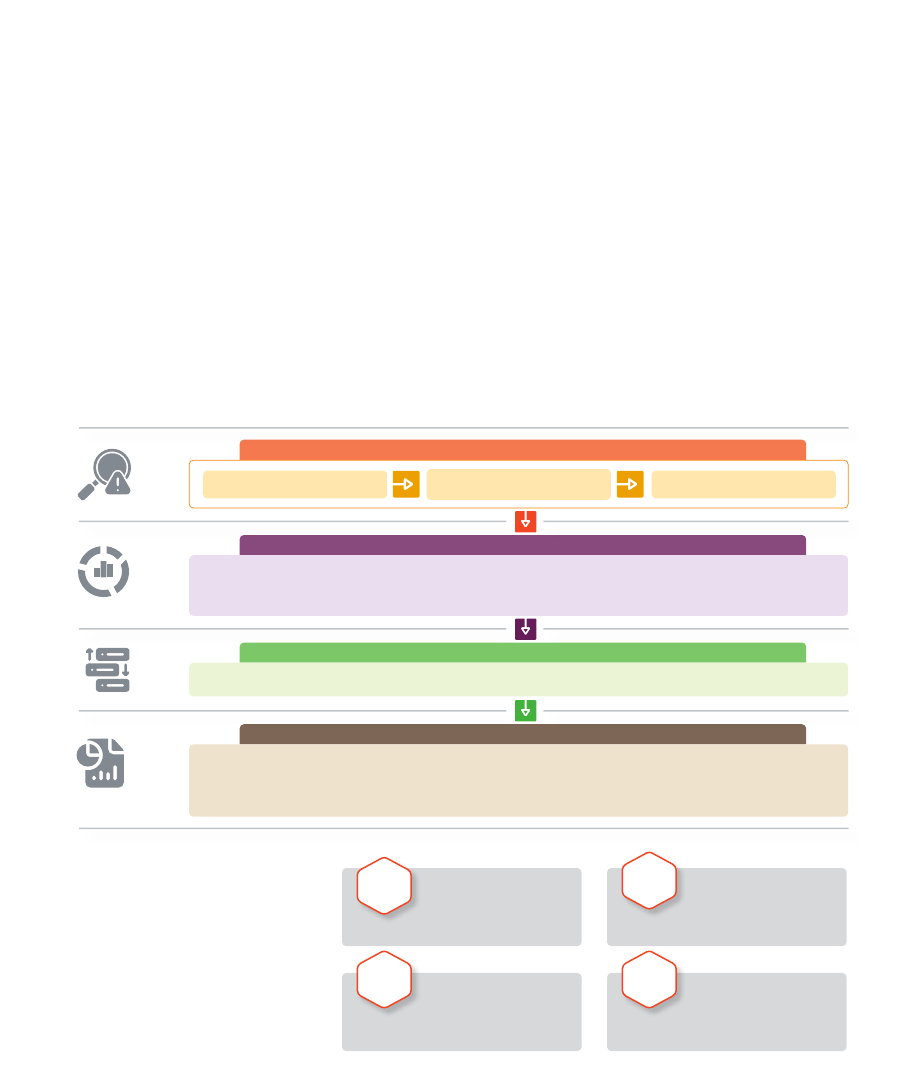
We follow a structured process to identify material topics that influence the Bank’s strategy and operations as outlined below.
OUR MATERIALITY DETERMINATION PROCESS
I D E N T I F Y
A S S E S S
P R I O R I T I S E
M O N I T O R A N D R E P O RT
We assess the relative importance in terms of the impact on the Bank’s strategy and
influence on stakeholder decisions
We continuously monitor the identified material topics taking account of changes in the operating
environment and respond by re-aligning the Bank’s strategy. Topic progress is reported to stakeholders
and the Board of Directors on a regular basis.
Material issues are ranked based on their likelihood and impact
The Operating Landscape
Stakeholder Needs and
Expectations
Risks and Opportunities
OUR MATERIALITY THEMES
The materiality assessment for 2023 was
built on the material topics identified
during the previous year and this year, we
grouped these topics under four broader
themes. The topics were reviewed in
line with changes in operations and
there were no significant changes to the
reporting boundaries. Further, there was
no change in materiality for the material
matters concerned.
M1
Adapting to the
evolving context
Caring for our
people
Enabling
responsible growth
Nurturing a
sustainable business
operation
M2
M4
M3
In line with the principle of double materiality, our Integrated Report extends beyond financial
reporting and includes non-financial performance, risk and opportunities and outcomes
attributable to or associated with our key stakeholders, which have a significant influence on
our ability to create and preserve value, while minimising value erosion.
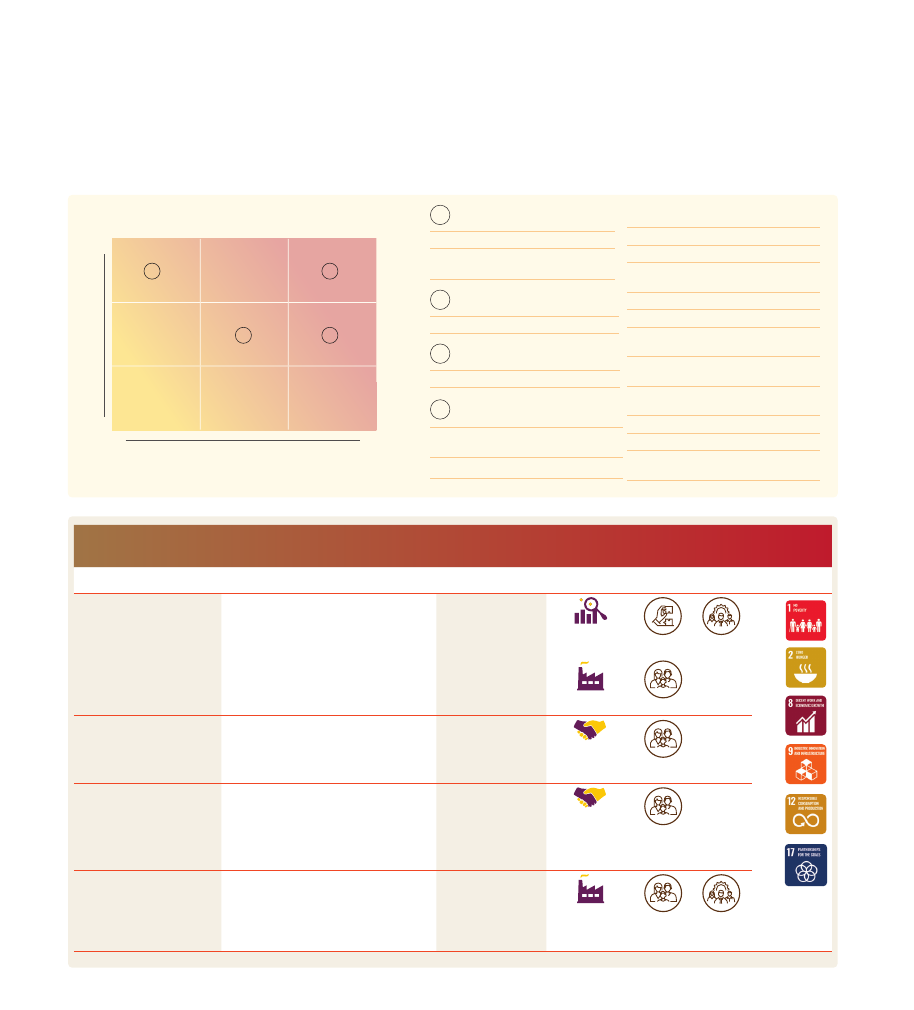
A
M2 - 6 Responsible banking
M4 - 3 Climate change and environmental
footprint
B
M2 - 3 Responsible procurement
C
M3 - 3 Diversity and equal opportunity
D
M1 - 1 Macroeconomic developments and
policy trends
M1 - 2 Customer experience
High
High
Low
Low
F I N A N C I A L M A T E R I A L I T Y ( I N T E R N A L )
IMP
ACT MA
TERIALITY (EXTERNAL)
C
A
B
D
M1 - 3 Customer privacy and data security
M1 - 4 Digitalisation and technology
M2 - 1 Customer support and business
revival
M2 - 2 Brand reputation
M2 - 4 Anti-bribery and anti-corruption
M2 - 5 Regulatory environment,
governance, and compliance
M3 - 1 Employee health, safety and
wellbeing
M3 - 2 Talent management and labour
relations
M3 - 4 Labour rights (outsourced/contract)
M4 - 1 Financial performance
M4 - 2 Socio-economic contribution and
financial inclusion
MATERIAL MATTERS
Material
topics
Why it is
material to BoC
Our response
Capitals
impacted
Stakeholders
impacted
Contribution
to UN SDGs
M1 : Adapting to the evolving context
1 Macroeconomic
developments and
policy trends
Multifaceted challenges affecting
Sri Lankan economy and related policy
developments have a direct impact
on the financial sector operations,
performance and sustainability.
The operating
landscape
Pages 44 to 48.
Financial
Capital
Manufactured
Capital
Customers
Shareholder and
Fund Providers
Employees
2 Customer
experience
The key differentiator in the intensely
competitive banking sector of
Sri Lanka.
A primary partner
for our customers
Pages 84 to 89.
Social and
Relationship Capital
Customers
3 Customer privacy
and data security
(GRI 418 SASB FN-
CB-230a.2)
Increased thrust towards digitalisation
has heightened vulnerability to
customer privacy and security issues,
thereby requiring organisations to
strengthen IT security frameworks.
A digitally
empowered Bank
Pages 98 to 102.
Social and
Relationship Capital
Customers
4 Digitalisation and
technology
Driving digital excellence is a key
strategic aspiration for the Bank.
A Digitally
Empowered Bank
Pages 98 to 102.
Manufactured
Capital
Customers
Employees
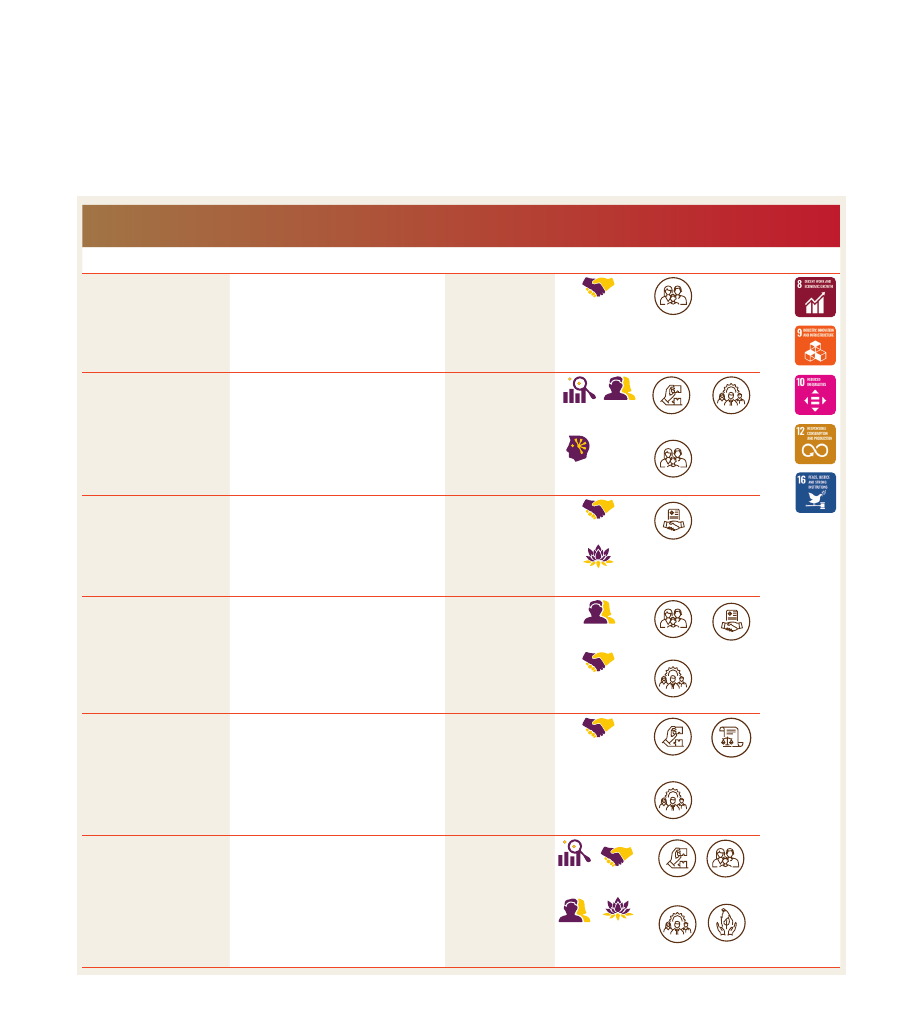
Material
topics
Why it is
material to BoC
Our response
Capitals
impacted
Stakeholders
impacted
Contribution
to UN SDGs
M2 : Enabling responsible growth
1 Customer support
and business revival
(SASB FN-CB-240a.1
SASB FN-CB-240a.2)
We continue to lead the country’s
economic recovery by supporting
business revival through rescheduling/
restructuring facilities, cash flow
monitoring and providing access to
finance.
A primary partner
for our customers
Pages 84 to 89.
Social and
Relationship Capital
Customers
2 Brand reputation
Consistently ranked as Sri Lanka's
No.1 banking brand, and Positive
brand and reputation help to attract
and retain customers and other
stakeholders.
A primary partner
for our customers
Pages 84 to 89.
Intellectual
Capital
Financial
Capital
Human
Capital
Customers
Shareholder and
Fund Providers
Employees
3 Responsible
procurement
(GRI 204)
BoC engages with a large base of
suppliers and ensures responsible
practices in procurement through
propagation of sustainable practices.
A beacon of trust
in everything
we do
Pages 103 to 109.
Social and
Relationship Capital
Natural
Capital
Business
Partners
4 Anti-bribery and
anti-corruption
(GRI 205, 406 SASB
FN-CB-510a.2)
As a state-owned entity, nurturing a
culture of anti-bribery and
anti-corruption is vital in the
responsible creation of shared value.
A winning,
talented and
diverse team
Pages 90 to 97.
Human
Capital
Social and
Relationship Capital
Customers
Employees
Business
Partners
5 Regulatory
environment,
governance and
compliance
(GRI 207, 419, 307)
It is imperative to ensure compliance
on current and emerging regulations
as failure to do so leads to litigation,
regulatory and reputational risks.
Corporate
governance
Pages 111 to 121
Risk and
opportunities
Pages 132 to 148.
Social and
Relationship Capital
Shareholder and
Fund Providers
Employees
Regulators
6 Responsible
banking
Responsible lending practices
underpin BoC’s ability to drive
impactful socio-economic change.
Performance of
business segments
Pages 73 to 82.
Financial
Capital
Human
Capital
Social and
Relationship
Capital
Natural
Capital
Customers
Shareholder and
Fund Providers
Employees Community and
Environment
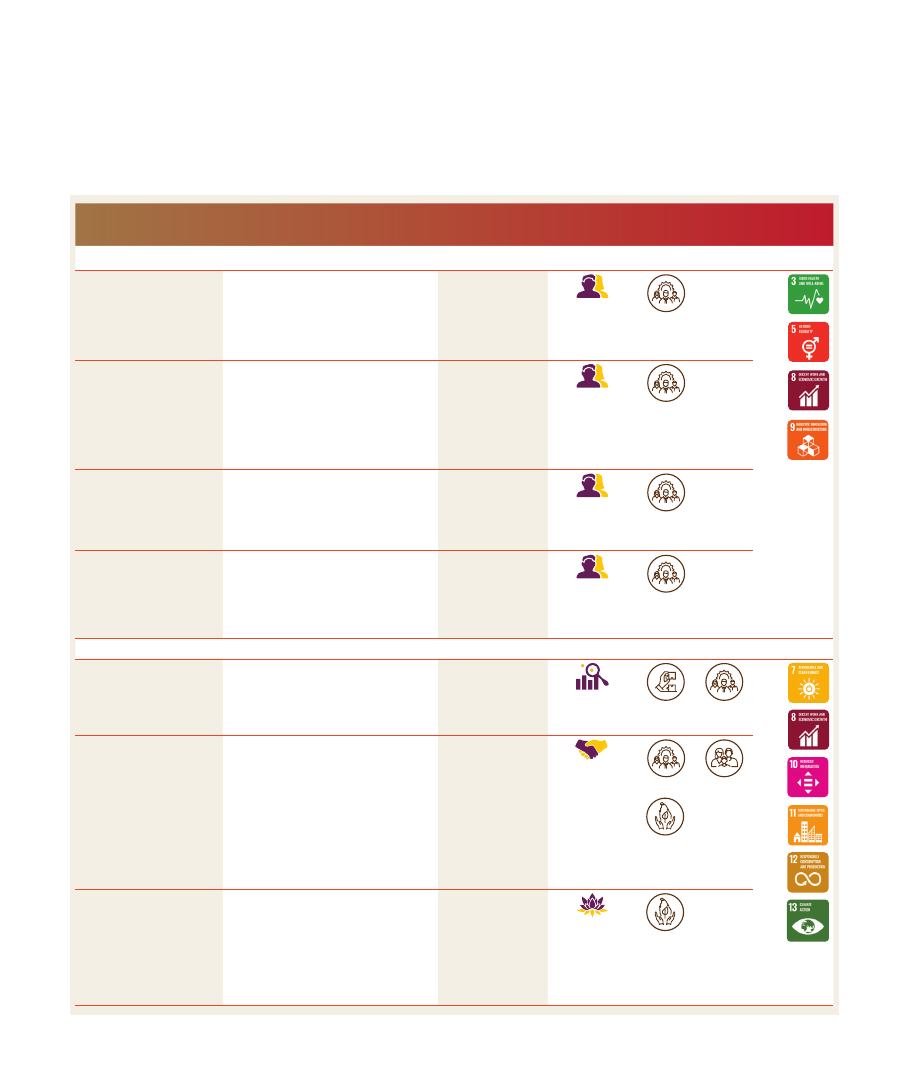
Material
topics
Why it is
material to BoC
Our response
Capitals
impacted
Stakeholders
impacted
Contribution
to UN SDGs
M3 : Caring for our people
1 Employee health,
safety and wellbeing
(GRI 403)
Promoting employee health,
safety, and well-being enhances
employee productivity and minimises
absenteeism, employee turnover and
hiring costs.
A winning,
talented and
diverse team
Pages 90 to 97.
Human
Capital
Employees
2 Talent management
and labour relations
(GRI 401, 402, 404,
407)
Employees are vital in driving
corporate strategy and are one of
the Bank’s most valuable assets,
underscoring the importance of
managing employee related issues
effectively.
A winning,
talented and
diverse team
Pages 90 to 97.
Human
Capital
Employees
3 Diversity and equal
opportunity
(GRI 405)
Prioritising diversity creates a positive
work environment that supports
the overall goals of the Bank and
contributes to its long-term success.
A winning,
talented and
diverse team
Pages 90 to 97.
Human
Capital
Employees
4 Labour rights
(outsourced/
contract)
(GRI 408, 409)
BoC is committed to provide a safe
and conducive work environment
for all outsourced and contract
employees engaged by the Bank in
addition to the permanent cadre.
A winning,
talented and
diverse team
Pages 90 to 97.
Human
Capital
Employees
M4 : Nurturing a sustainable business operation
1 Financial
performance
(GRI 201)
Critical in ensuring commercial
sustainability and continued value
generation to stakeholders.
Financial review
Pages 68 to 72.
Financial
Capital
Shareholder and
Fund Providers
Employees
2 Socio-economic
contribution and
financial inclusion
(GRI 201, 202, 413,
203
SASB N-CB-240a.3
SASB FN-CB-240a.4)
Promoting socio-economic
empowerment and financial
inclusion open access to new
markets, generates new revenue
streams, improves reputation
and also contributes to economic
development.
A beacon of trust in
everything we do
Pages 103 to 109.
Embedding
sustainability
Pages 61 to 63.
Social and
Relationship Capital
Community and
Environment
Employees
Customers
3 Climate change
and environmental
footprint
(GRI 302, 305
SASB FN-CB-410a.2)
Minimising the environmental
impact can help to meet regulatory
requirements, enhance reputation,
reduce costs, increase revenue and
create new business opportunities.
A beacon of trust
in everything
we do
Pages 103 to 109.
Natural
Capital
Community and
Environment
MATERIAL MATTERS